Retailers often assume that loyalty adoption comes down to one thing: the value of the rewards. Offer enough points, discounts, or exclusive benefits, and customers will join.
Rewards matter, but they are only part of the equation. Even a strong loyalty program will underperform when customers do not encounter it at the right moment, enrollment feels like extra work, or the benefits are difficult to access during a purchase.
In many cases, the problem is not the program itself. It is how the program fits into the shopping experience.
A good program can still be difficult to adopt
Before a customer can benefit from a loyalty program, several things have to happen. They need to become aware of it, understand the value, complete enrollment, and remember how to access it later.
Every step creates another opportunity to lose them.
A customer may see a sign near the register but decide not to hold up the line. They may receive an enrollment email after the purchase, when the immediate incentive has passed. They may be asked to download an app they do not want or create another account they are unlikely to remember.
None of these barriers seem especially significant on their own. Together, they can make a worthwhile program feel inconvenient.
Retailers often respond by improving the rewards or adding new tiers. But more complexity does not solve a distribution or access problem. In some cases, it makes the experience even harder to understand.
The better question is not simply, “Are the rewards valuable?” It is, “How easily can a customer begin using that value?”
Loyalty should appear naturally in the journey
The strongest enrollment opportunities usually occur when the customer is already engaged with the retailer.
That might be during checkout, immediately after an online order, while viewing a relevant offer, or during an in-store interaction. At these moments, the customer can see how joining connects to the purchase they are already making.
The process should feel like part of the experience, not a separate marketing task.
This also means retailers need to think beyond a single enrollment channel. A website banner may reach online shoppers, but it will not necessarily reach someone browsing in a store. A cashier prompt may work at checkout, but it will not help a customer who uses self-checkout or buys through an ecommerce site.
Loyalty should be visible across the places where customers already interact with the brand, including stores, websites, order confirmations, receipts, email, SMS, events, and customer service.
That does not mean promoting the program everywhere with the same message. It means creating multiple, relevant opportunities to participate.
Access matters as much as enrollment
Getting customers to join is only the first step. They also need to be able to use the program when it matters.
This is where many loyalty experiences break down.
A customer reaches the register and cannot find their membership card. They do not have the retailer’s app installed, cannot remember their login, or are unsure which phone number or email address is connected to the account. A reward exists, but the customer cannot easily see or redeem it.
That weakens the value of the program for both sides. The customer misses a benefit, and the retailer loses an opportunity to reinforce loyalty during the transaction.
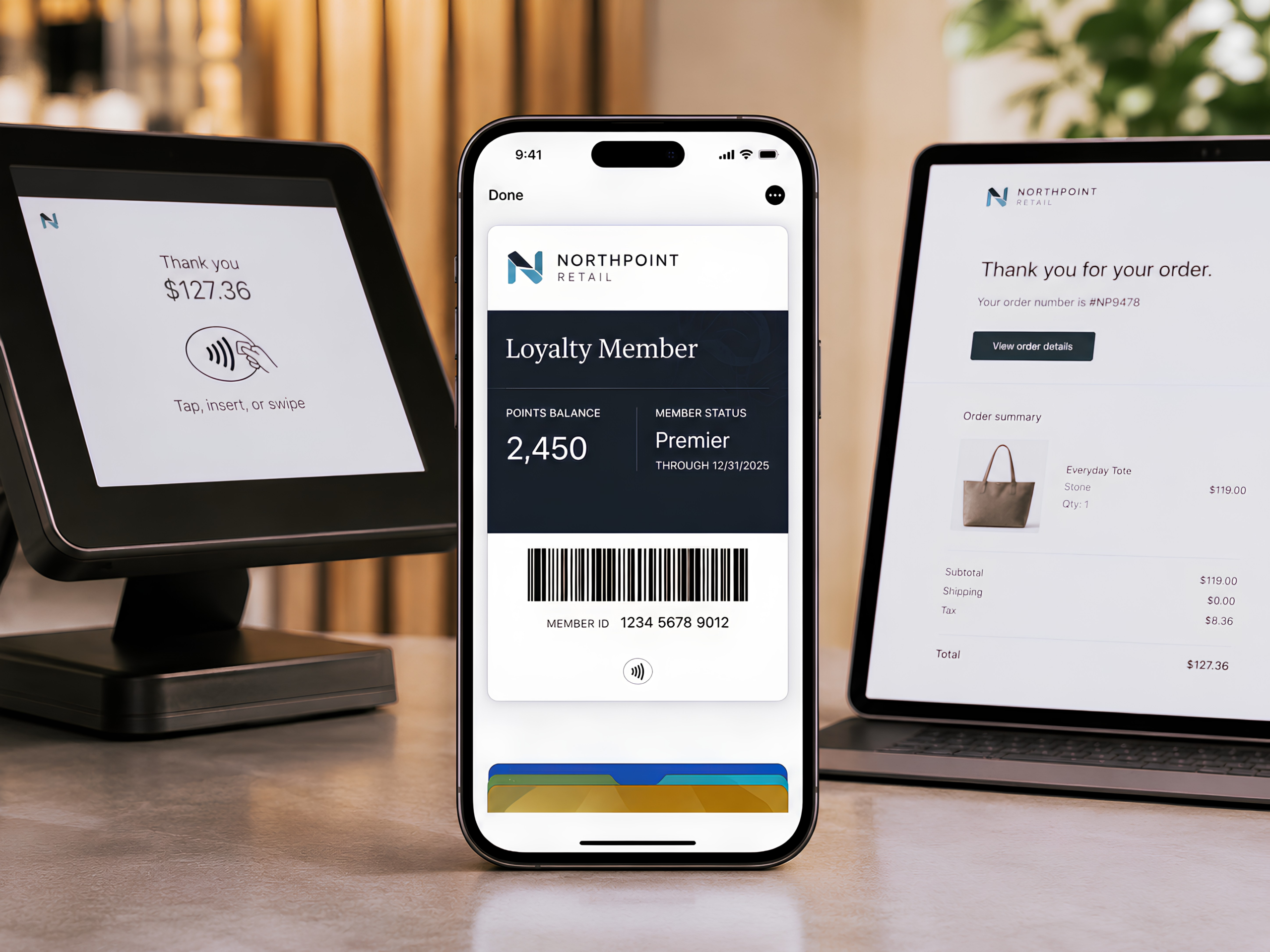
At the point of use, customers should be able to quickly access:
- Their membership status or tier
- Current points or reward balances
- Available offers and expiration dates
- A barcode or QR code for identification
- Relevant account or store information
Customers should not have to search through old emails or navigate several screens to understand what is available.
When loyalty information is accessible at the point of use, the program feels more immediate and relevant. Customers can see the value they have earned and use it without interrupting the shopping experience.
Retail loyalty should work across channels
Customers do not think about loyalty in terms of a retailer’s internal systems. They expect their membership and benefits to follow them across stores, ecommerce, mobile devices, and customer service interactions.
A customer who enrolls online should be able to identify themselves in a store. Someone who joins at checkout should be able to view their rewards later without starting over. Offers should not feel disconnected simply because they were delivered through different channels.
When the experience is fragmented, participation becomes harder. Customers may technically be enrolled but still fail to engage because the program does not feel consistent or easy to use.
A connected loyalty strategy brings identity, access, and communication together. It allows customers to join through one touchpoint and continue participating through another.
Mobile wallets can help close the access gap
Apple Wallet and Google Wallet give retailers a practical way to make loyalty programs easier to distribute and use.
A digital loyalty pass can live directly in the mobile wallet already available on a customer’s phone. It can display membership information, points, status, offers, and a barcode or QR code for identification.
Retailers can distribute the pass through QR codes, email, SMS, websites, landing pages, checkout flows, and in-store signage. Once it is added, the customer has a persistent place to access the program without carrying a physical card or repeatedly searching for an account.
The pass can also change as the customer relationship evolves. Point balances, membership levels, offers, and other information can be updated over time. Retailers can send relevant notifications and keep the experience current without asking the customer to download a replacement card.
Mobile wallets do not make an unappealing loyalty program valuable. They help remove the friction that prevents customers from discovering, accessing, and using the value that already exists.
The real driver of adoption
Retailers do not always need more rewards, more tiers, or more program features. They may need a simpler path between customer interest and participation.
A strong loyalty experience makes the program easy to discover, quick to join, visible after enrollment, and accessible during a purchase. It fits naturally into the way customers already shop rather than asking them to adopt a separate behavior.
Rewards give customers a reason to care. Distribution, visibility, and access determine whether they act on that reason.
Bambu Wallet helps retailers create and manage digital loyalty passes for Apple Wallet and Google Wallet. Passes can be distributed across customer touchpoints, updated in real time, and used to keep loyalty information accessible throughout the shopping experience.
Book a demo to see how Bambu Wallet can support a more visible, convenient, and mobile-first loyalty program.
Follow Bambu Wallet on LinkedIn for more insights on digital wallets, loyalty, customer engagement, and the future of mobile-first experiences.