A customer visits a restaurant, enjoys lunch, and joins the loyalty program at checkout. The brand records a new member. The customer leaves thinking about the rest of the afternoon.
From the business’s perspective, a relationship has started. From the customer’s perspective, they bought lunch.
That difference matters. A sign-up creates a way to recognize and reach someone, but it does not establish a habit or give them a reason to return. For retailers and restaurants, the period after the first purchase deserves its own strategy: one that makes the next visit worthwhile, keeps that value accessible, and measures whether customers actually come back.
The gap between acquisition and retention
Consider what happens when acquisition teams are measured on new customers, store teams on enrollments, and CRM teams on campaign engagement. Each can hit its target while a first-time buyer quietly disappears.
The second visit sits across those responsibilities. It depends on the original experience, the promise made at enrollment, the follow-up, and how easily the customer can use what they were offered. When nobody owns that entire sequence, activity can look like progress even when repeat purchasing stays flat.
This is also an acquisition economics issue. If expected customer value depends on future purchases, the first transaction has only begun to test that assumption. A campaign that brings in inexpensive first-time buyers may be less valuable than one attracting customers who return profitably.
The second purchase does not prove lasting loyalty. It does provide a concrete outcome against which to evaluate the transition from acquisition to retention.
Give the customer a next step worth taking
Good food, reliable products, and good service come first. A reminder cannot repair a disappointing experience, and a coupon may simply subsidize another disappointing visit.
When the fundamentals are strong, the next question is practical: what would make another visit useful to this customer?
A restaurant might introduce a lunch guest to a relevant weekday reward. A specialty retailer might offer a fitting appointment, a product care session, or access to a member event. An existing points balance can also provide motivation, provided the customer understands what it can unlock and the next reward feels attainable.
The timing should reflect how people buy. A coffee shop and a furniture retailer should not use the same return window. Even within one brand, a local customer and an out-of-town visitor may need different follow-up.
Design that next step before asking customers to enroll. “Join our program” explains what the business wants. A clear benefit explains why the customer should care.
Where mobile wallet passes can help
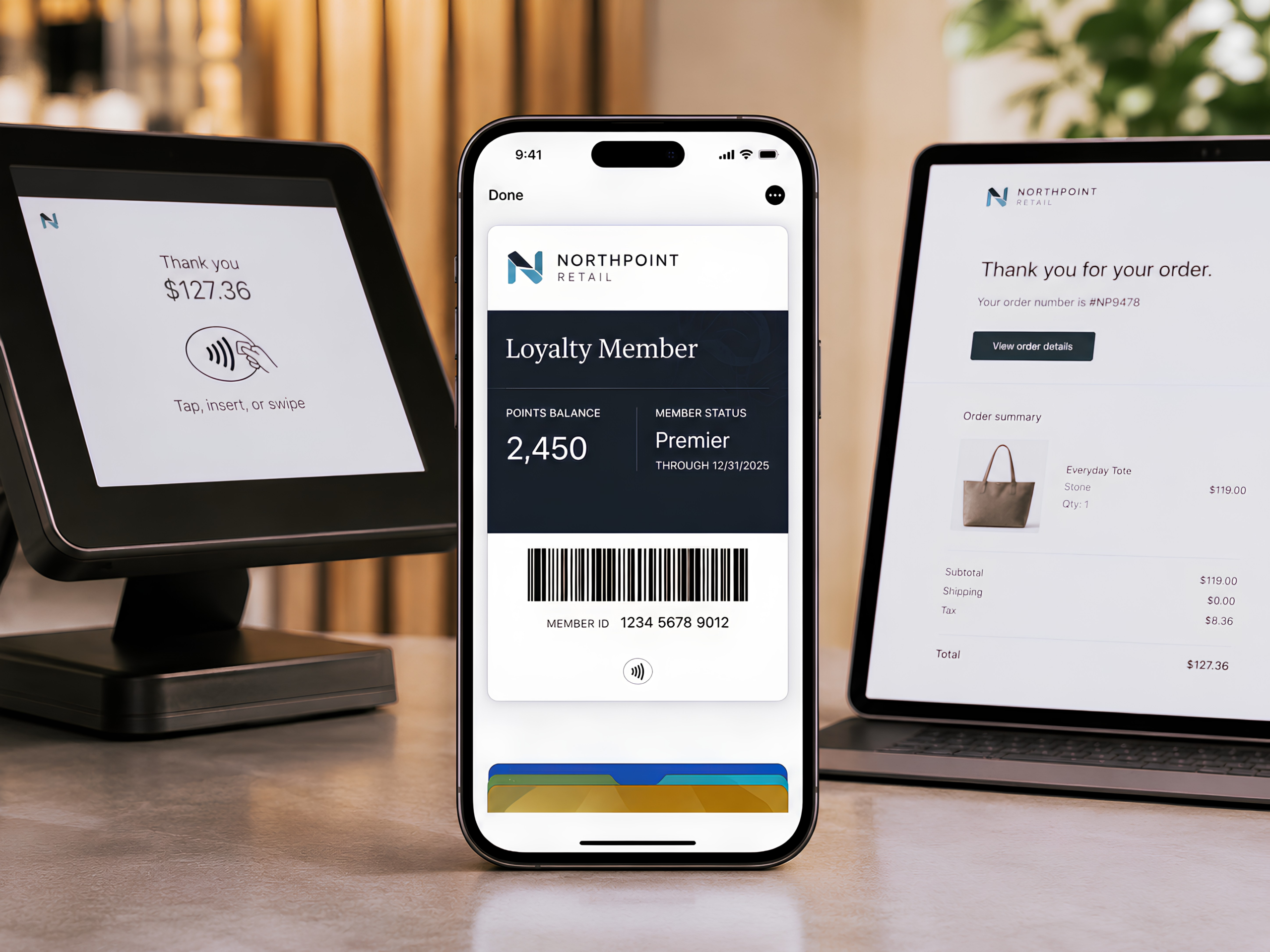
A mobile wallet pass gives that benefit a place to remain accessible after checkout. Saved in Apple Wallet or Google Wallet, it can carry a loyalty balance, an available offer, membership details, and a scannable identifier without requiring a separate branded app.
For example, a restaurant could invite a first-time guest to save a pass containing a return-visit offer. The pass shows the benefit, expiration date, and redemption instructions. A relevant reminder can point back to it before the offer expires. Once redemption is recorded through the connected transaction or redemption workflow, the pass can update to reflect the customer’s current rewards.

That connection to operations matters. Staff need to recognize the offer, checkout needs to honor it, and redeemed benefits need to stop appearing as available. Otherwise, a convenient digital pass leads to an inconvenient experience at the counter.
Location features can also help customers find a saved pass near a participating business. The experience varies by platform: Apple supports location-relevant pass suggestions, while Google Wallet supports nearby notifications subject to permissions and platform controls. Proximity should support a useful benefit, rather than become a reason to send another promotion. See Apple’s pass relevance guidance and Google Wallet’s notification documentation.
Email and SMS can still introduce the offer or provide more detail. The pass gives customers somewhere to retrieve and use it when they are ready.
Measure the return, then test what caused it
Start with second-purchase conversion: the percentage of first-time purchasers who make another purchase within a defined period. Choose that period based on the category’s buying cycle, and give each customer group the same amount of time to return before comparing results.
Alongside it, track:
- Time to second purchase, to understand how quickly customers return.
- Contribution margin after incentives and program costs, to assess whether the extra business is worthwhile.
- Later repeat purchases, to see whether activity continues beyond the introductory offer.
Wallet saves and redemptions help explain what happened, but they do not establish what caused it. Customers who save a pass may already be more inclined to return.
Where feasible, randomly assign eligible first-time customers to a test group receiving the new journey and a control group receiving the existing experience. Compare purchasing across everyone assigned to each group. This helps distinguish additional business from discounts given to customers who would have returned anyway.
Make the second visit someone’s responsibility
Assign one accountable owner, with support from marketing, loyalty, and operations. Start with a defined customer group, a credible reason to return, and a checkout experience that delivers on the promise. Expand when the results justify it.
Bambu Wallet helps brands create, distribute, and update passes for Apple Wallet and Google Wallet, connecting offers and rewards to ongoing customer engagement. For a second-visit strategy, that means keeping the promised value available after the customer leaves.
Book a demo to explore how Bambu Wallet can support your customer retention strategy. Follow us on LinkedIn for more perspectives on mobile wallet engagement.