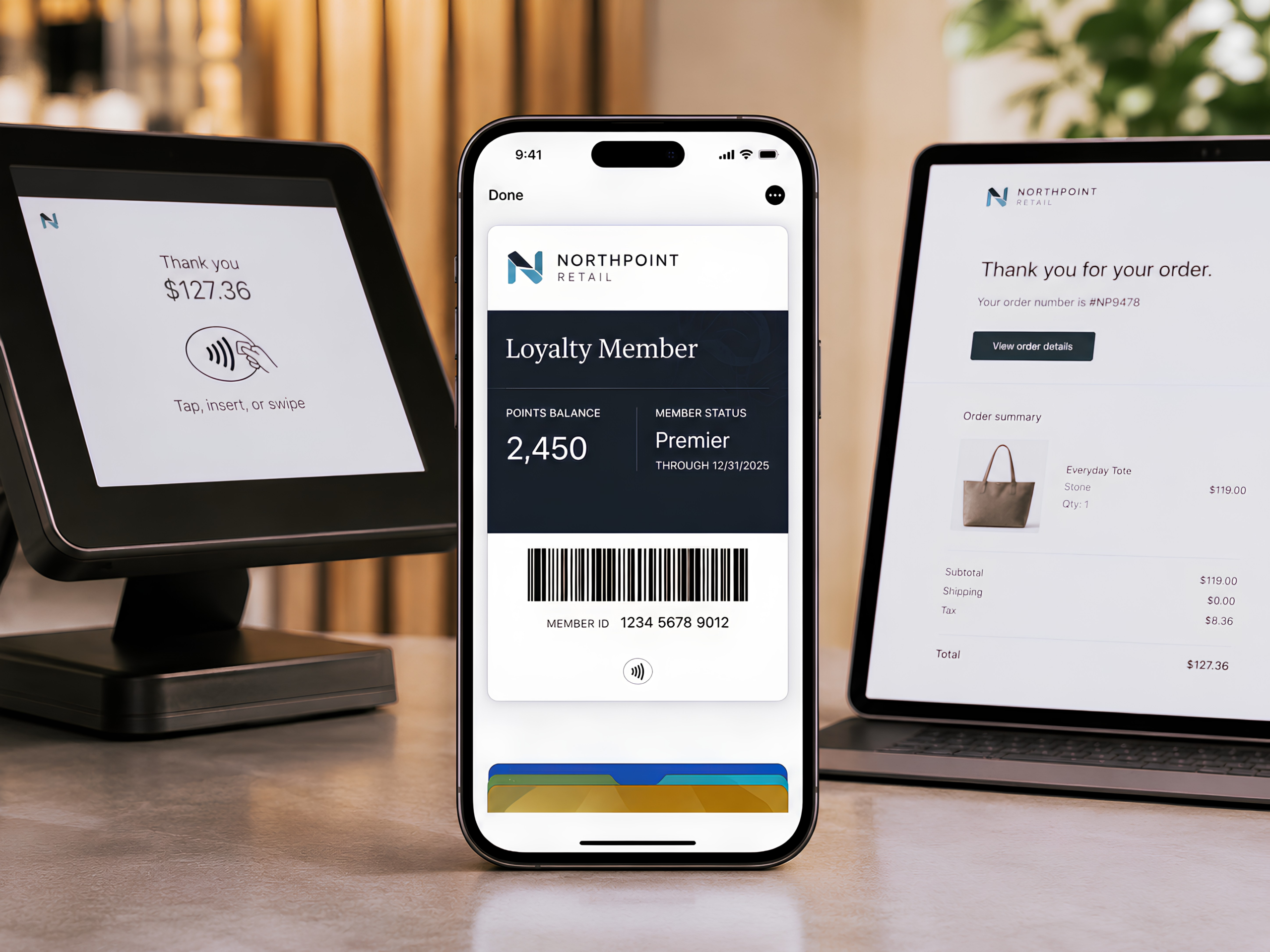
Retail apps have earned an important place in the digital customer experience.
They can support shopping, account management, loyalty, personalized recommendations, order history, payments, store information, customer service, product discovery, and much more. For customers who engage frequently with a retailer, a well-designed app can provide significant value.
The problem is not what apps can do.
The problem is everything that has to happen before that value is reached.
A customer has to decide that a retailer deserves space on their phone, visit an app store, download the app, create or access an account, enable the right permissions, and remember to open it again when the next relevant moment arrives.
For a retailer’s most engaged customers, that may be a reasonable tradeoff. For everyone else, the app itself can become a gate between the customer and the value the retailer is trying to provide.
That is where app fatigue becomes more than a user experience issue. It becomes an engagement problem.
The App Download Is Becoming a Higher Bar
Consumer resistance to required app downloads is not new.
A Harris Poll found that 58% of U.S. adults were less likely to join a loyalty program if accessing the benefits required downloading an app. At the time, the finding was an early warning that consumers did not necessarily want a dedicated application for every brand they interacted with.
Seven years later, newer research points in the same direction.
Clutch surveyed U.S. smartphone users in 2026 and found that 80% had downloaded an app because they were required to rather than because they wanted to. Among those surveyed, 72% said the experience left them at least mildly annoyed. Nearly half said they only download an app when they genuinely need one, while 54% said they will delete an app once they are finished using it.
That does not mean customers have stopped valuing apps. In the same research, 59% still preferred mobile apps over mobile websites. The issue is more nuanced.
Customers can value the utility of an app while becoming increasingly selective about which brands deserve a permanent place on their phones.
Loyalty data tells a similar story. Antavo’s 2026 Global Customer Loyalty Report, based on 10,000 consumers globally, found that preference for accessing loyalty programs through a mobile app fell from 59.0% in 2025 to 44.1% in 2026. Over the same period, preference for digital loyalty cards increased from 34.7% to 42.4%. The report points to app fatigue and demand for lower-friction engagement as possible explanations for the shift.
For retailers, the strategic question is no longer simply, “How much functionality can we put in the app?”
It is also, “Which customer interactions actually need the app?”
Removing the Download Only Solves Half the Problem
There are already plenty of ways to interact with customers without requiring an app.
Retailers can send offers through email or SMS. Loyalty members can enter a phone number at the register. Customers can log into an account through a website or follow links from marketing campaigns.
Those channels can remove the download requirement, but they do not necessarily solve the next problem: recall.
The customer still has to remember that the reward exists, find the email, search their messages, remember their login, look up their loyalty number, or otherwise go searching for value they have already earned.
Forrester’s Consumer Benchmark Survey found that 34% of U.S. online adults who belong to a customer loyalty program agree that they frequently forget to use the programs they belong to.
That changes how retailers should think about loyalty adoption.
Acquisition is only the first conversion.
A customer can join a program successfully and still provide very little long-term value if rewards remain out of sight, offers are forgotten, or accessing the program requires a conscious effort every time they shop.
Remove the enrollment barrier without addressing visibility and recall, and the drop-off simply moves further down the customer journey.
This Is Where Mobile Wallets Fit
Mobile wallets occupy an interesting position between lightweight marketing channels and full branded applications.
A customer can receive a wallet pass through a website, email, SMS, QR code, landing page, or another existing touchpoint and save it to Apple Wallet or Google Wallet. Apple and Google both support distribution outside of a dedicated branded app.
Once saved, the pass remains available in the customer’s wallet and can carry the information needed for frequent retail interactions.
Depending on the program, that might include:
- Loyalty status and points
- Available rewards
- Promotional offers
- Gift card balances
- Membership information
- Customer or loyalty IDs
- Barcodes or other redemption credentials
The distinction is important. The wallet is not simply another place to store a static loyalty card.
Apple Wallet passes can be updated after they are issued, support notifications, and surface based on relevant times or locations. Google Wallet also supports pass updates, notifications, and nearby-pass geofence functionality for supported pass types.
That gives retailers a persistent layer for customer engagement without requiring the customer to begin every interaction by reopening a branded application.
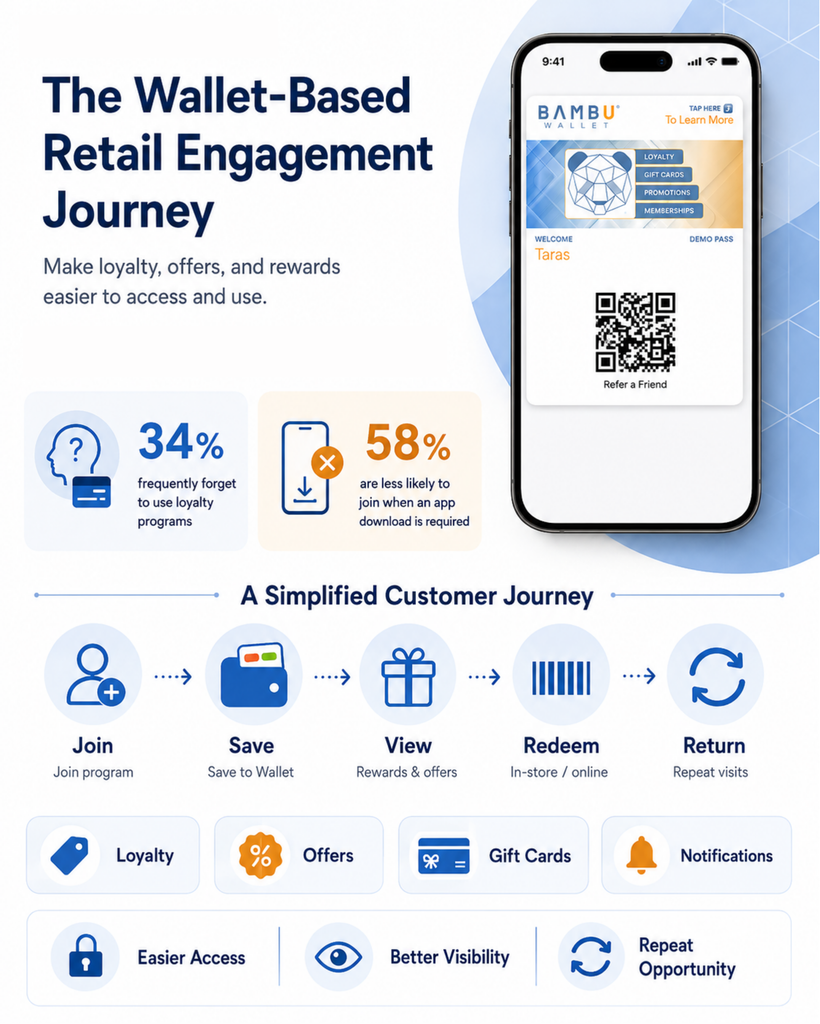
The resulting journey can look very different.
Traditional app journey
Discover → App Store → Download → Create Account → Open → Find Reward → Redeem → Remember to Return
Wallet-supported journey
Discover → Save → View → Redeem → Receive Relevant Updates → Return
The purpose is not to eliminate every step from every retail experience. It is to determine which steps actually contribute value and which simply exist because of the channel being used.
A Wallet Pass Is Not a Replacement for the Retail App
The strongest argument for mobile wallets is not that retailers should abandon their apps.
That would ignore much of what makes a good retail app useful.
A wallet pass is not a product catalog. It is not designed for extended browsing sessions. Complex account management, detailed product discovery, shopping carts, checkout experiences, rich content, and other high-intent activities can still belong inside an app or mobile website.
The more useful distinction is between deep experiences and frequent utility.
Retail apps are particularly strong when customers want to spend time with a brand. Wallet passes can be especially useful when customers simply need something from the brand at the right moment.
A shopper standing at the register may not want to navigate a full application. They may simply need their loyalty barcode.
Someone considering where to shop this weekend may not open several retailer apps looking for unused rewards. A relevant wallet notification may remind them that a reward already exists.
A customer who earned points yesterday should not necessarily have to open an application just to see that their balance changed.
These are relatively small interactions individually, but collectively they make up a large portion of the loyalty experience.
Retailers Should Think in Layers, Not Channels
For years, digital strategy often treated the branded app as the destination.
Get the customer to download it. Get them logged in. Encourage them to return. Put more capabilities inside it.
That model still works for highly engaged customers, but it becomes less effective when every retailer is competing for the same finite amount of customer attention.
A stronger model is layered.
The app can provide the deepest branded experience. The website can support discovery, shopping, and account access without requiring installation. Email and SMS can drive campaigns and communicate directly. Mobile wallets can provide persistent access to the information and actions customers need repeatedly.
These channels do not have to compete with one another.
They can hand customers from one experience to another depending on what that customer is trying to accomplish.
A wallet offer can link to a richer shopping experience. An email can distribute a loyalty pass. A website can enroll a member and immediately offer the pass for their wallet. The app can remain available for customers who want the full experience.
The goal is not to force every customer through the same doorway.
It is to make the right part of the experience available with the right amount of effort.
The Opportunity Is Already Inside Most Retailers
Retailers have spent years investing in loyalty infrastructure, customer data, rewards, offers, personalization, ecommerce, CRM systems, and mobile applications.
In many cases, the problem is not a lack of functionality.
It is that a significant portion of that functionality never reaches the customer at the moment it could influence behavior.
A reward that exists inside an account but is forgotten has limited value.
A loyalty program that a customer would join if it did not require another download represents missed participation.
An offer delivered through a channel the customer does not check until after it expires represents missed engagement.
Mobile wallets give retailers another way to close those gaps by extending selected parts of the customer experience into Apple Wallet and Google Wallet.
Bambu Wallet helps businesses create, distribute, manage, and update these kinds of digital passes. Retailers can use the platform for loyalty cards, offers, coupons, gift cards, memberships, and other customer experiences, while supporting dynamic updates, push notifications, location-based messaging, workflows, and analytics.
The objective is not to recreate the entire retail app inside a wallet pass.
It is to identify the moments where requiring the full app experience is unnecessary and give customers a more direct route to the value that already exists.
The Next Phase of Retail Engagement
Apps are not going away, and they should not.
For the right customer and the right interaction, they remain one of the richest digital environments a retailer can offer.
But app fatigue changes the economics of requiring one.
Retailers increasingly need to distinguish between experiences that genuinely benefit from an app and interactions that have been placed behind an app simply because that was the established digital model.
That distinction opens up a much larger opportunity.
The gap in retail engagement is not always a gap in functionality. Many retailers already offer more digital value than their customers ever see or use.
The next phase of retail engagement may not come from building more. It may come from putting more of what already exists somewhere customers will actually use it.
See What Mobile Wallets Could Add to Your Retail Strategy
Bambu Wallet helps retailers turn Apple Wallet and Google Wallet into persistent customer engagement channels for loyalty, rewards, offers, gift cards, memberships, and more.
Book a demo to see how Bambu Wallet can fit into your existing retail customer journey.
And follow Bambu Wallet on LinkedIn for more insights on mobile wallets, loyalty, customer engagement, and digital strategy.