For years, digital marketing has been built around campaigns.
A brand launches a promotion, runs paid media, sends emails, drives traffic to a landing page, and measures the short-term lift. Then the campaign ends, attention fades, and the brand starts over again with a new message, new creative, and a new budget cycle.
That model still has its place. Campaigns can create urgency, support launches, and drive immediate action. But they also create a constant reset. Every new initiative requires brands to re-earn attention from the same audience, often through increasingly crowded and expensive channels.
That is why more teams are rethinking the role of marketing infrastructure. Instead of treating engagement as a series of disconnected bursts, they are looking for ways to maintain an ongoing, useful presence with the customer. The shift is not just about running better campaigns. It is about building persistent customer connections that continue to create value long after the first interaction.
Mobile wallets fit directly into that shift.
The limits of campaign-based marketing
Campaigns are designed for moments. They are built to capture attention during a defined window and push a customer toward a specific action.
That works well for things like:
- seasonal promotions
- product launches
- limited-time offers
- event announcements
- short-term traffic goals
The problem is that campaign-based marketing often treats customer attention as something temporary. A brand gets one shot through an email, one impression through an ad, or one visit through a landing page. If the customer does not act in that moment, the opportunity starts to disappear.
Even when a campaign performs well, the connection is often fragile. The email gets buried. The ad impression is gone the second a user scrolls past it. The app is downloaded and then forgotten. In too many cases, the brand paid to create a moment but failed to build an ongoing channel.
This creates a cycle of dependency. Teams keep spending to recreate visibility instead of investing in systems that make visibility more durable.
Persistent connection changes the model
A persistent customer connection works differently.
Instead of relying on repeated reacquisition, the brand creates a direct, ongoing presence on the customer’s phone. That presence is not there for one promotion only. It becomes part of the customer experience over time.
This changes the question from:
“How do we get attention for this campaign?”
to:
“How do we stay accessible and relevant after the first interaction?”
That is a much more strategic question. It shifts marketing away from isolated executions and toward infrastructure that supports retention, repeat engagement, and lifecycle communication.
When brands think this way, they start to value channels differently. They look beyond immediate clicks and ask whether a channel can remain useful after the first conversion. They stop measuring success only by launch spikes and begin thinking about the long-term relationship.
Why wallets matter in this shift
Mobile wallet passes support this model because they are built for ongoing presence.
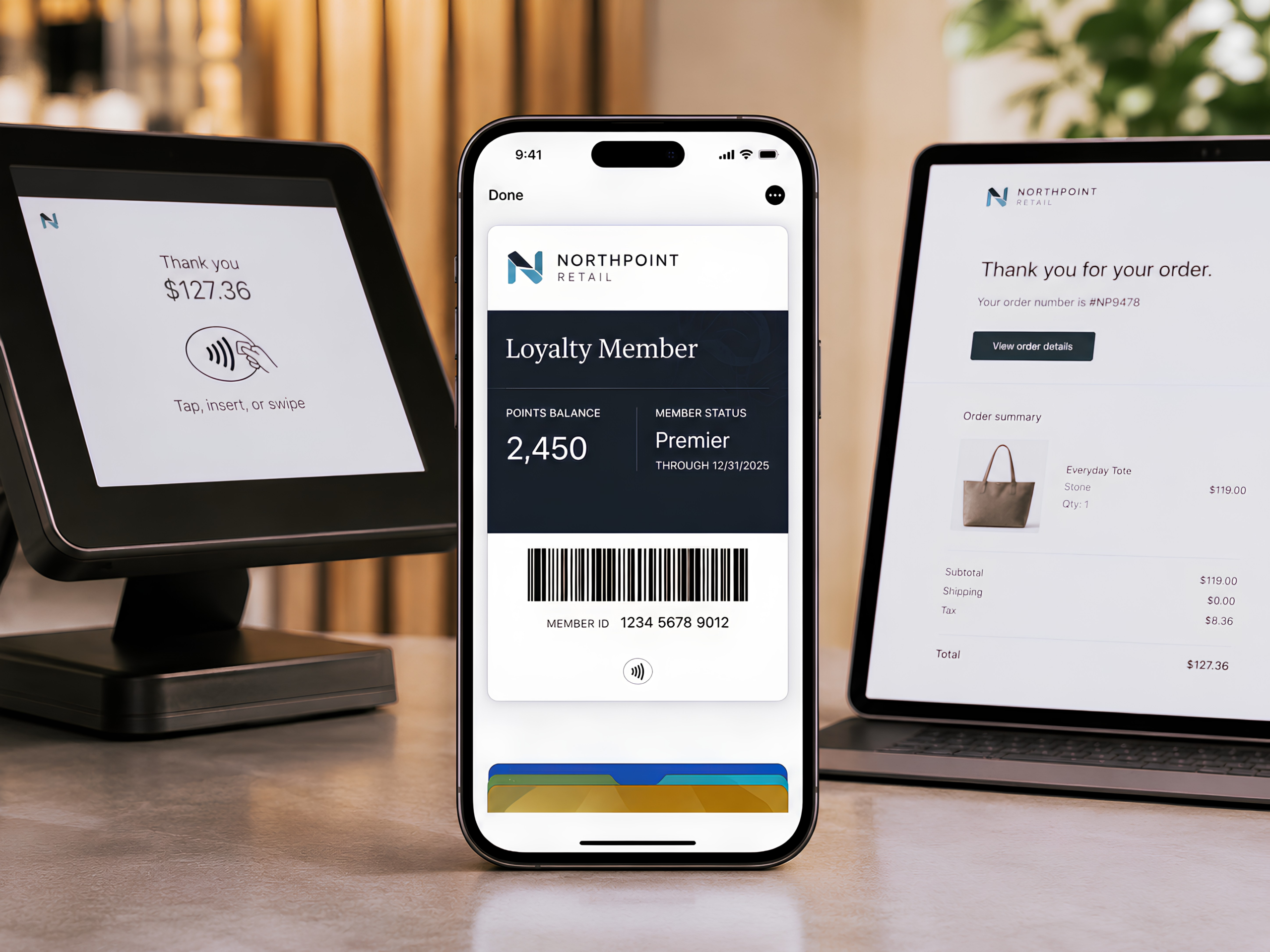
When a customer saves a pass to their Apple Wallet or Google Wallet, the brand is no longer limited to a one-time interaction. The pass stays on the device, where it can continue to provide value over time. It can serve as a loyalty card, membership card, offer, ticket, gift card, or other utility tied to the customer relationship.
That matters because utility is what makes persistence acceptable.
Customers do not want endless noise. They do want tools that are easy to access and genuinely helpful. A wallet pass works because it combines convenience with brand visibility. It is not just another message. It is something the customer can actually use.
That gives brands a different kind of presence:
- visible without requiring an app download
- accessible without searching an inbox
- updateable without reissuing a new asset
- connected to real customer actions and use cases
This is what separates infrastructure-driven engagement from campaign bursts. A campaign asks for attention. A wallet pass can continue earning attention because it remains useful.
From promotion to relationship layer
One of the most important changes in this shift is how brands think about the purpose of engagement.
In a campaign mindset, messaging is often tied to a single offer or event. Once that moment passes, the communication loses relevance.
In a persistent model, the connection itself becomes the asset.
A saved wallet pass can start with a promotional use case, but it does not need to end there. A single pass can evolve as the relationship evolves. A welcome offer can lead to loyalty enrollment. A membership card can become a channel for updates and reminders. A ticket can become an entry point for future experiences.
That continuity matters because customer relationships are not built in isolated moments. They are built through repeated, relevant touchpoints over time.
Wallet infrastructure supports that continuity by allowing brands to stay connected without forcing the customer to start over each time.
What this looks like in practice
The shift from campaigns to persistence is not abstract. It shows up in very practical ways.
A retailer might launch a seasonal promotion through a wallet pass, but instead of disappearing after redemption, that pass remains on the customer’s phone and continues to support future offers, loyalty identification, and store-level engagement.
A membership organization might use a digital card not only as proof of membership, but also as a direct channel for renewals, event reminders, and updates tied to member status.
A restaurant brand might turn a one-time signup incentive into a longer-term wallet relationship that keeps loyalty, offers, and timely notifications in one accessible place.
In each case, the initial campaign still matters. It is often the entry point. But the real value comes from what happens after the first conversion.
That is where many traditional campaigns fall short. They are optimized for the top of the funnel and underbuilt for what comes next.
The strategic advantage of infrastructure-driven engagement
The brands that win long term are usually not the ones creating the most noise. They are the ones building the strongest systems for staying present, relevant, and easy to engage with.
Infrastructure-driven engagement offers several advantages:
- It reduces the need to repeatedly fight for attention from scratch
- It creates continuity across the customer lifecycle
- It supports first-party engagement in a more controlled environment
- It turns one interaction into a foundation for future value
- It helps marketing work more like a lasting product experience and less like a series of disconnected pushes
This is especially important as teams face more pressure to do more with less. If every campaign has to rebuild visibility from zero, efficiency suffers. If the brand already has a persistent customer connection in place, each new initiative becomes more effective because it is layered onto an existing relationship.
That is a very different operating model from traditional campaign thinking.
The future is not campaign-less. It is connection-first.
Campaigns are not going away. Brands will always need launches, promotions, announcements, and seasonal initiatives.
But the role of those campaigns is changing.
Instead of being the whole strategy, they are becoming entry points into broader engagement systems. The smartest teams are not choosing between campaigns and customer connection. They are using campaigns to create connection, then using infrastructure to maintain it.
That is the real shift.
Marketing is moving away from isolated moments of attention and toward persistent, customer-friendly presence. Mobile wallets support that transition by giving brands a way to remain useful, accessible, and connected over time.
In a market where attention is harder to win and easier to lose, that kind of persistence is not just helpful. It is strategic.
Ready to build more persistent customer connections with mobile wallets? Book a demo.