Customer friction is often treated as a marketing problem. A customer does not redeem an offer, use a loyalty benefit, access an account, or return for a service visit, so the response is usually another campaign: more emails, more reminders, more promotional urgency, or more app prompts.
For operations leaders, the issue often sits deeper than campaign performance. It sits in the mechanics of access.
A customer may value the offer but never find it. A member may be enrolled in a loyalty program but fail to identify themselves at checkout. A policyholder may have coverage details available online but still call support because the information is buried behind a portal. A guest may receive a reminder but miss it in an inbox full of similar messages.
In each case, the business has already done the hard work. It created the program, captured the customer, built the offer, issued the benefit, or delivered the service. The breakdown happens after that, when the customer has to retrieve the right information at the right moment. That is where friction becomes expensive.
Friction Creates Operational Cost
Every customer-facing program depends on access. Loyalty programs depend on customers being able to identify themselves. Offers depend on customers being able to find and use them before they expire. Membership programs depend on people having proof of status when they need it. Insurance, automotive, healthcare, events, and service-based businesses all depend on customers being able to retrieve information without unnecessary effort.
When access breaks down, the cost does not stay contained inside marketing. It spreads across support, operations, frontline teams, and revenue performance. Support teams answer questions that could have been avoided. Store or branch employees manually look up customers who cannot find a card, number, coupon, or confirmation. Operations teams manage replacement processes for physical materials. Marketing teams continue sending reminders into channels where attention is already fragmented.
The impact is not always dramatic in a single interaction, which is why it can be easy to overlook. But small points of drag compound. A lost card does not just mean a customer misplaced plastic. It can mean a missed loyalty identification moment, an untracked transaction, a slower checkout, or a customer who decides the program is not worth using. A forgotten login can turn a simple self-service action into another support request. A buried offer can mean the business paid to create demand but failed to make the next step easy enough.
The Problem with Access by Memory
Many customer experiences still depend on the customer remembering where something lives. They need to remember to bring a physical card, find the right email, recall their login credentials, open the brand’s app, navigate to the right screen, and keep track of expiration dates, reward balances, appointment details, policy information, or renewal windows.
That model is fragile because customers are not organizing their lives around a brand’s systems. They are moving through busy days, switching between channels, devices, priorities, and decisions. Even when they like a brand, they are unlikely to work hard to retrieve information unless the value is obvious and immediate.
For operations teams, the question is not simply whether customers should be more engaged. The better question is how much effort the current process requires before value can be used. If a customer has to search, log in, download, remember, replace, or ask for help, the experience is already carrying operational weight. Some customers will push through it. Others will not. Either way, the business is adding steps between intent and action.
Why Traditional Channels Keep Breaking Down
Physical cards have a clear operational limitation: they can be lost, forgotten, damaged, or left at home. They also create production, fulfillment, and replacement work. For high-frequency programs like loyalty, membership, gift cards, and access credentials, those gaps can directly affect identification and usage.
Email is flexible, but it is not built for persistent access. It works well for delivery, announcements, receipts, and longer-form communication. It works less well as the place customers are expected to retrieve a time-sensitive offer, membership credential, or benefit when they are standing at checkout or trying to complete a task.
Apps can be powerful, but they introduce their own friction. Customers must download the app, keep it installed, remember their login, allow notifications, and know where to find the right feature. For brands with high-frequency app usage, that may be reasonable. For many others, it is too much to ask for every loyalty card, offer, membership, service update, or proof-of-coverage interaction.
This does not mean physical cards, email, or apps are ineffective. Each has a role. A monthly newsletter can live in email. A full account dashboard may belong in a portal or app. But a loyalty card, offer, membership credential, ticket, proof of insurance, or service reminder needs to be available at the moment of use. When the access layer is weak, the rest of the program has to work harder.
Mobile Wallet Passes Reduce the Breakpoints
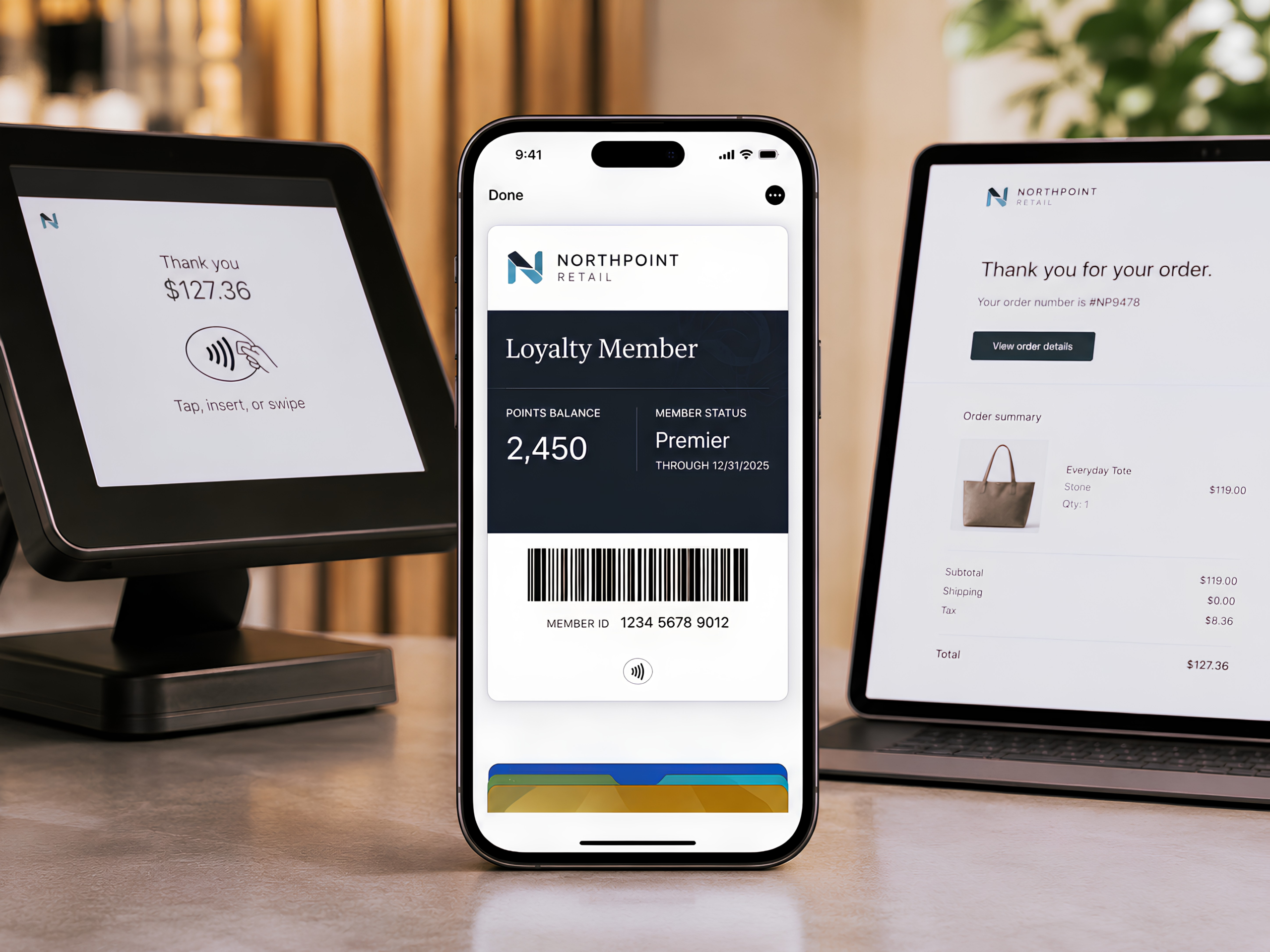
Mobile wallet passes offer a more practical access layer because they live in Apple Wallet and Google Wallet, where customers already store items designed for quick retrieval.
Instead of asking customers to keep track of a physical card, search an inbox, or log into a separate app, a business can give them a pass that stays on their phone. That pass can represent a loyalty card, offer, membership, gift card, event ticket, insurance card, ID, service reminder, or other customer-facing experience. Bambu Wallet helps businesses create, distribute, update, and manage branded digital wallet passes for Apple Wallet and Google Wallet across those types of use cases.
The operational value comes from the fact that a wallet pass is persistent and updateable. It is not a one-time message that disappears into an inbox or a static card that becomes outdated. It can be updated when a reward balance changes, an offer expires, a membership status changes, an appointment approaches, or a customer moves into a new lifecycle stage. Businesses can also use wallet-based push notifications and location-based messages to keep important information timely without relying only on email or app engagement.
That changes the role of the customer touchpoint. The goal is no longer to repeatedly remind customers to go find something. The goal is to keep the relevant object available when it is needed.
The Revenue Impact of Easier Access
For operations leaders, the revenue impact is not limited to redemption. It shows up across the customer lifecycle.
When customers can access loyalty credentials more easily, businesses have a better chance of identifying known customers at the point of purchase. When offers are easier to find, customers are more likely to use them before they expire. When membership status or benefits are visible, the perceived value of the program becomes more tangible. When service reminders, renewal information, or policy details are available in the wallet, customers have fewer reasons to delay action or contact support.
The common thread is reduced avoidable friction. A business does not need to make every program more complex to improve performance. In many cases, the first improvement is making the existing value easier to access.
That matters because many customer programs already have value built into them. The problem is that too much of that value is trapped behind weak access points. A customer cannot use the offer they cannot find. They cannot present the card they forgot. They cannot act on the reminder they never saw. They cannot self-serve if the required information is locked behind a login they do not remember.
Mobile wallet passes help close that gap by moving useful information into a persistent, mobile-first format that can be updated over time.
A Better Operating Model for Customer Engagement
The practical shift is to stop treating access as an afterthought. For years, many brands have focused heavily on campaign strategy, creative, segmentation, and promotional mechanics. Those still matter, but if the customer experience depends on channels that are easy to lose, ignore, or forget, even strong campaigns can underperform.
Operations leaders should evaluate customer engagement through a systems lens. Where does the customer need to access information? How many steps does it take? What happens when they cannot find it? Which teams absorb that failure? How often are employees, support teams, or marketing teams compensating for avoidable friction?
Those questions expose the real cost of lost cards, forgotten logins, and buried offers. They also point toward a more efficient model.
Mobile wallet passes do not replace every channel. They do not eliminate the need for email, apps, portals, or CRM systems. But they can give businesses a more persistent access point for the moments where convenience, visibility, and timing matter most.
For companies trying to improve engagement and operational efficiency, the opportunity is not just to communicate more often. It is to make important customer information easier to access, easier to update, and harder to lose.
The result is a customer experience that feels simpler on the surface, while giving the business a more reliable way to support loyalty, offers, memberships, service reminders, and lifecycle communication over time.
For more insights on mobile wallet strategy, customer engagement, and loyalty innovation, follow Bambu Wallet on LinkedIn.