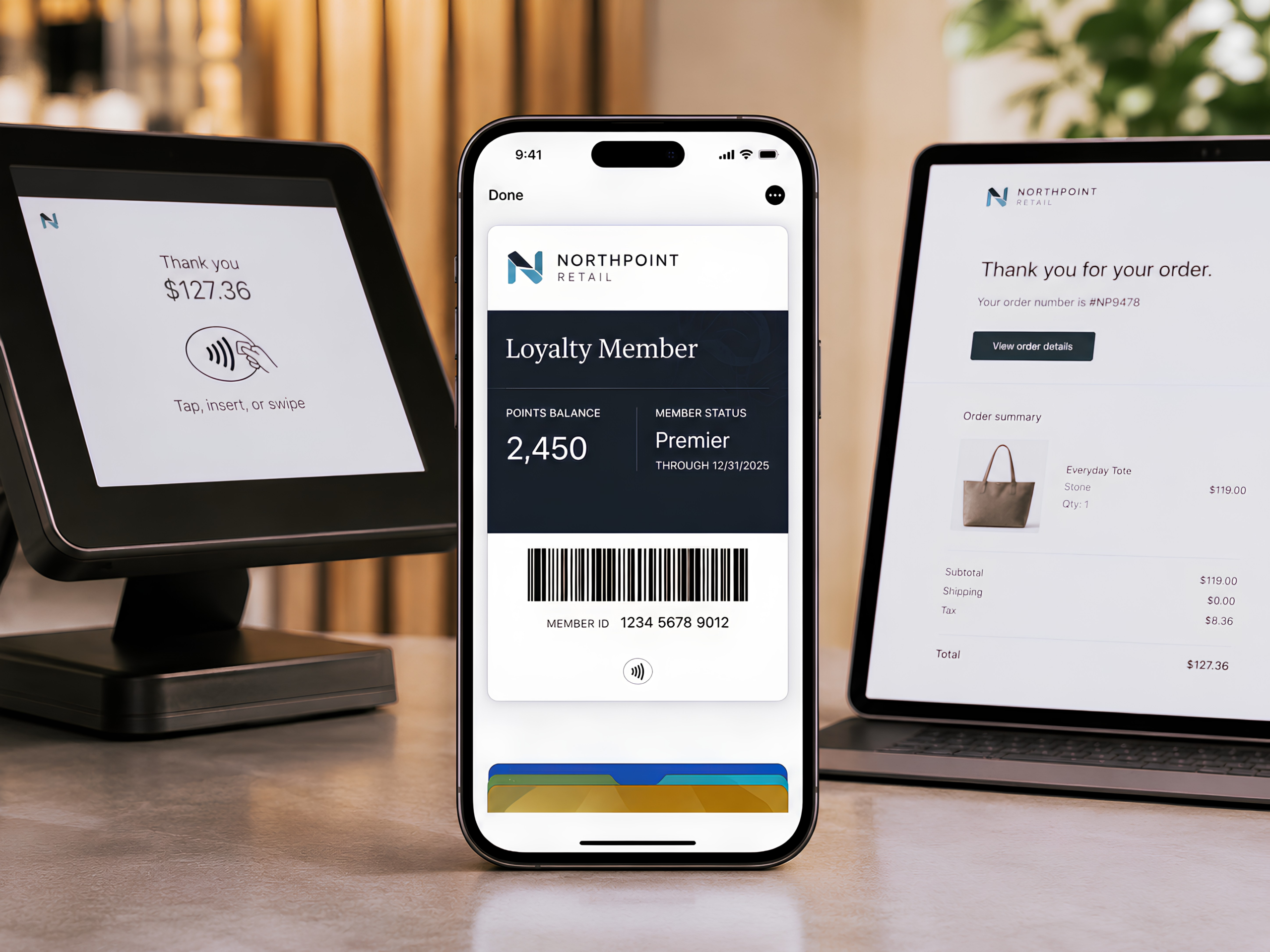
Most businesses still think of wallets as a payment tool. Tap to pay, store a card, move on. That narrow view is exactly why many brands are missing one of the most effective customer engagement channels available today.
The terms “digital wallet” and “mobile wallet” get used interchangeably, but the distinction is more than semantics. Understanding the difference is what unlocks a completely different way to think about customer interaction, visibility, and long-term engagement.
Digital Wallet vs Mobile Wallet: What’s the Difference?
At a high level, all mobile wallets are digital wallets, but not all digital wallets are mobile wallets.
A digital wallet is a broad category that includes any platform used to store payment methods, credentials, or digital assets. These can exist across devices, not just on smartphones.
Examples of digital wallets include:
- PayPal
- Venmo
- Cash App
These platforms are typically used for transactions, transfers, or storing financial information, and are often accessed within their own apps or environments.
A mobile wallet, on the other hand, is a specific type of digital wallet that lives directly on a smartphone and is integrated into the device’s operating system.
Examples of mobile wallets include:
- Apple Wallet
- Google Wallet
- Samsung Wallet
These wallets not only store payment methods but also support things like tickets, loyalty cards, memberships, and passes that can update in real time.
Why This Distinction Actually Matters
The real difference is not about definitions. It’s about how and where engagement happens.
Digital wallets, in general, are often passive. They store information. Users access them when needed.
Mobile wallets, on the other hand, are always present, always accessible, and deeply integrated into the device experience.
That changes everything.
Instead of being something a customer opens occasionally, a mobile wallet becomes:
- A persistent presence on the lock screen
- A surface for real-time updates
- A channel for location-based interactions
- A system-level feature, not another app competing for attention
This is where mobile wallets stop being a storage tool and start becoming an engagement channel.
The Problem with Traditional Channels
To understand why this matters, you have to look at the current state of customer communication.
Most brands rely on a mix of:
- SMS
- Mobile apps
Each of these has real limitations.
Email is oversaturated. Messages pile up, and even well-crafted campaigns get buried.
SMS can cut through the noise, but it comes with constraints. It has to feel urgent or it risks being perceived as intrusive.
Mobile apps require downloads, ongoing usage, and constant justification to stay on a customer’s phone. Most fail at that.
The result is a simple reality. Visibility is the problem.
It’s not that customers don’t care. It’s that your message is competing with hundreds of others at the same time.
Where Mobile Wallets Change the Game
Mobile wallets operate differently because they exist outside of those crowded channels.
They don’t rely on inbox placement.
They don’t require an app download.
They don’t compete for attention in the same way.
Instead, they provide:
Persistent Visibility
Wallet passes live on the device. They are easy to access and designed to be used repeatedly, not forgotten.
Real-Time Updates
Content on a pass can change dynamically. Offers, points, membership status, and event details can all be updated instantly.
Lock Screen Notifications
Updates can trigger notifications that appear directly on the lock screen, making them far more visible than traditional push notifications.
Location-Based Engagement
Passes can surface automatically when a user is near a relevant location, creating contextual interactions that feel timely rather than intrusive.
This combination creates a fundamentally different experience. One that aligns with how people actually use their devices.
Reframing the Wallet: From Storage to Strategy
This is where most organizations fall short.
They see mobile wallets as a place to store a card. A digital version of something physical.
But that mindset limits what is possible.
When used correctly, a mobile wallet becomes:
- A loyalty platform without the need for an app
- A promotion channel with higher visibility
- A membership system that updates in real time
- A ticketing and access solution that simplifies user experience
In other words, it becomes infrastructure for ongoing engagement.
What This Means for Your Business
Understanding the difference between digital and mobile wallets should lead to a shift in strategy.
Instead of asking:
How do we digitize what we already have?
The better question is:
How do we use mobile wallets to create better, more visible customer interactions?
That shift opens the door to:
- Higher redemption rates on offers
- Stronger participation in loyalty programs
- Reduced reliance on app downloads
- More consistent engagement over time
It also aligns with a broader trend. Consumers are becoming more selective about what they download and more responsive to experiences that feel seamless and integrated.
Mobile wallets fit that expectation.
Where Bambu Wallet Fits In
Most organizations do not need to build their own wallet experience. The infrastructure already exists through Apple Wallet and Google Wallet.
What they need is a way to use that infrastructure effectively.
Bambu Wallet enables businesses to:
- Create and distribute wallet passes at scale
- Deliver real-time updates and notifications
- Integrate wallet engagement into existing systems
- Build loyalty, promotions, memberships, and more without requiring an app
This is not about replacing existing channels. It is about adding a layer that improves visibility and strengthens how those channels work together.
The Bottom Line
The difference between digital wallets and mobile wallets is not just technical. It is strategic.
Digital wallets store information.
Mobile wallets create opportunities for engagement.
Organizations that understand this shift are already moving beyond traditional channels and building experiences that are more visible, more contextual, and more effective.
The question is not whether customers are using mobile wallets. They already are.
The question is whether your business is using them in a way that actually drives engagement.
If you are exploring how mobile wallet passes can fit into your engagement strategy, book a demo with Bambu Wallet to see how it works in practice.