For years, “owned channels” mostly meant one thing: grow the email list. If a brand had a healthy database, a strong send cadence, and a decent automation setup, it felt like the foundation of customer retention was covered.
That definition is getting outdated.
Enterprise marketing teams are still investing in email, and they should. But the broader strategy around owned media is changing. Privacy shifts, weaker third-party visibility, and rising dependence on rented platforms have pushed marketers to think less about isolated channels and more about building mobile-first ecosystems they control. At the center of that shift is first-party data, not just as a compliance requirement, but as the operating layer for long-term customer engagement. Apple’s Mail Privacy Protection limits open-rate visibility, and Google’s Privacy Sandbox updates reflect the broader move away from older cross-site tracking norms. At the same time, major platforms continue investing in privacy-oriented identity and data controls.
Owned channels are no longer just about reach
The old model of owned media was built around distribution. Capture an email, send a message, drive a click.
The newer model is built around continuity. Marketing teams want persistent, consented touchpoints that stay useful after the first click, first purchase, or first enrollment. They want channels that do more than deliver a campaign. They want channels that help maintain an ongoing customer relationship across loyalty, membership, offers, service updates, events, and identity.
That is a meaningful shift in mindset. Owned channels are no longer being judged only by how many messages they send. They are being judged by how well they help brands keep a direct connection to the customer over time, with less dependence on algorithms, ad platforms, or app re-engagement hurdles. First-party data is central to this because it is gathered directly from a brand’s own audiences and touchpoints, making it more relevant, more actionable, and more strategically durable than third-party alternatives.
Why the enterprise view is changing
Enterprise teams are dealing with a more complex engagement environment than they were five years ago.
A typical brand may have:
- email programs managed by one team
- paid media managed by another
- loyalty data sitting in a separate system
- app engagement that depends on downloads and reactivation
- SMS reserved for specific moments
- customer data spread across CRM, CDP, POS, and support platforms
That fragmentation creates a simple problem. The brand may own the customer record, but not the customer relationship in a consistent, visible way.
This is why marketers are rethinking the role of owned channels. They are looking for touchpoints that can live closer to the customer’s daily behavior, integrate with first-party systems, and remain useful beyond a single campaign window. In other words, the goal is not just sending messages. The goal is maintaining presence.
What a modern owned channel needs to do
If enterprise teams are redefining owned media, the bar is higher now. A real owned channel should be able to:
- support a direct, consent-based value exchange
- connect to first-party data and operational systems
- stay relevant after initial acquisition
- work in a mobile-first customer journey
- update in real time when status, offers, or membership details change
- reduce dependency on app downloads or unreliable visibility layers
This is where mobile wallet becomes more strategically important.
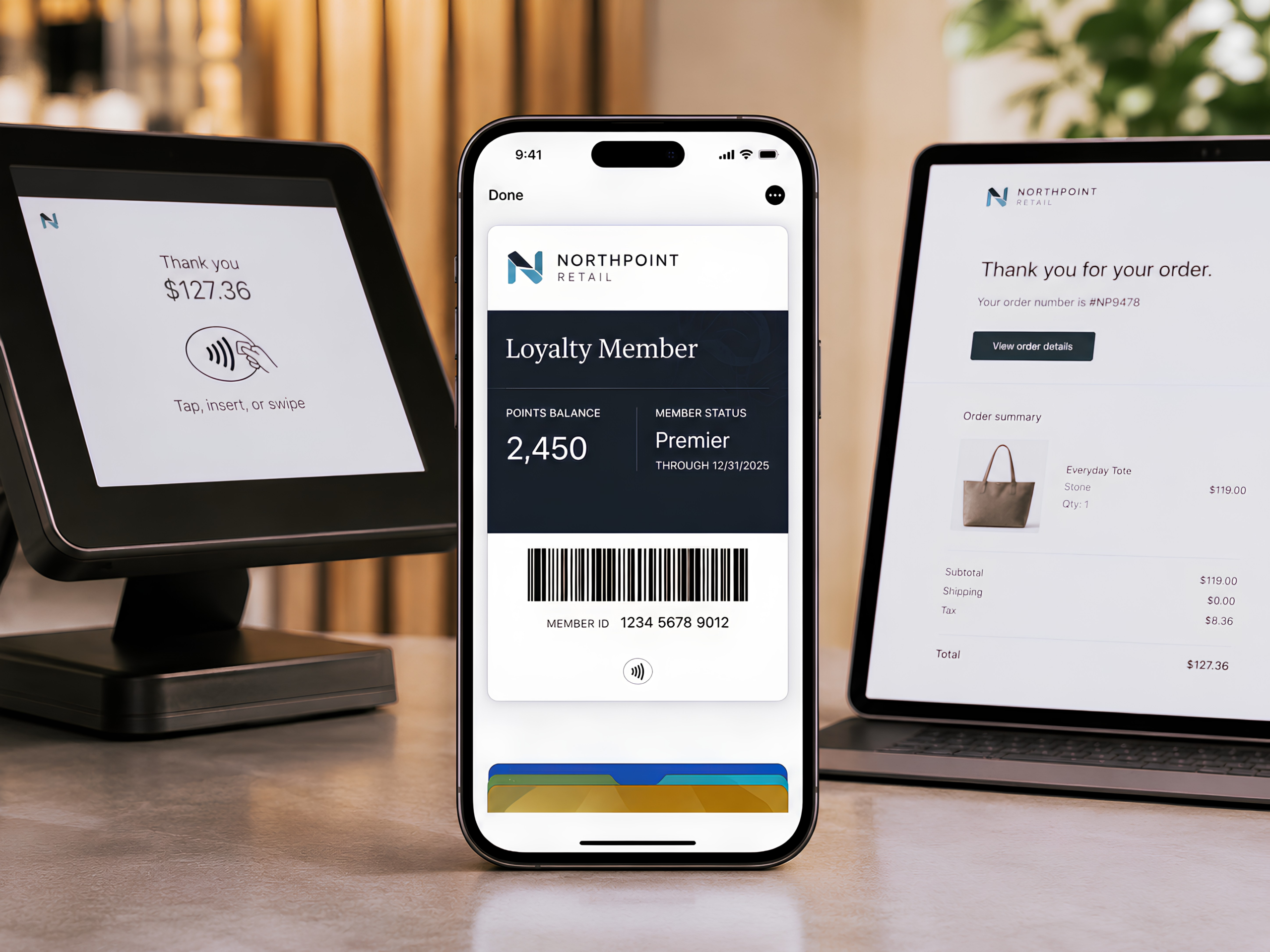
Apple Wallet and Google Wallet are built for persistent, everyday use. For brands, that means the ability to deliver loyalty cards, offers, memberships, gift cards, tickets, and other pass-based experiences in a native mobile environment customers already trust. With real-time updates and timely notifications, wallet passes become more than static assets. They create an owned, always-accessible channel for ongoing customer engagement.
Where mobile wallets fit in a first-party data strategy
Mobile wallets are not a replacement for CRM, CDP, or marketing automation. They are better understood as an activation and engagement layer for first-party data.
That distinction matters.
A wallet pass is not where enterprise data strategy begins. It is where strategy becomes visible to the customer. When a customer saves a pass for loyalty, membership, ticketing, or an offer, that action creates a high-intent, permission-based relationship. From there, the brand has an owned presence in a native mobile environment that can be updated as the customer’s status changes.
That changes the role of owned media in a few important ways.
First, it turns first-party data into something the customer can actually use. Too often, marketers think about first-party data only in backend terms: segmentation, attribution, suppression, personalization. All of that matters, but the customer never sees it. Wallet changes that dynamic by turning data into a live customer touchpoint.
Second, it gives enterprise teams a more durable engagement object. An email is a message. A wallet pass is an ongoing utility. That utility might be a loyalty card, a membership credential, a coupon, a ticket, or a stored-value pass. The point is that it stays relevant after the first interaction.
Third, it helps brands think more clearly about lifecycle orchestration. Email can drive enrollment. SMS can support urgent reminders. Paid media can acquire. But wallet can hold the persistent relationship in between those moments, especially when integrated with real-time updates and customer data infrastructure. Google and Apple both provide mechanisms for passes to be updated after they are saved, which is one of the reasons wallet is increasingly useful as a long-term engagement layer rather than a one-time distribution format.
Why this matters more for enterprise teams
Smaller brands can often get away with channel-by-channel execution for a while. Enterprise organizations usually cannot.
At scale, disconnected owned channels create friction fast. Data gets trapped. Customer experiences become inconsistent. Teams optimize for sends instead of outcomes. And marketers lose leverage because every program depends on a different tool, team, or handoff.
That is why more enterprise teams are starting to think in terms of owned ecosystems instead of owned channels.
An ecosystem approach asks better questions:
- How does a customer move from acquisition to retention?
- Which touchpoints remain useful after enrollment?
- Where does first-party data become visible and valuable to the customer?
- Which channels do we truly control, and which ones are borrowed reach?
- How do we reduce fragmentation across loyalty, offers, identity, and service communications?
Mobile wallet does not answer all of those questions by itself. But it fits naturally into that model because it gives brands a controlled, mobile-native presence tied to first-party data and real customer utility.
What enterprise marketers should do next
For teams rethinking owned channels, the next step is not to abandon email or rebuild the stack from scratch.
It is to expand the definition of owned media.
A practical approach looks like this:
- Audit current owned channels by persistence, not just performance. Ask which ones remain useful after the initial campaign.
- Identify high-frequency customer moments where a wallet pass could add utility, such as loyalty, membership, coupons, ticketing, or service updates.
- Map the first-party data signals that should trigger pass creation, updates, and lifecycle communications.
- Treat wallet as part of retention infrastructure, not a standalone tactic.
That is the broader shift happening inside enterprise marketing. Owned channels are no longer just about sending messages to a list. They are about building durable, mobile-first systems for direct customer engagement.
And in that environment, mobile wallet is becoming a lot more than a nice add-on. It is becoming part of how brands turn first-party data into ongoing relationship control.
Ready to build a more durable owned-channel strategy with mobile wallet? Book a demo.